Middlesex man facing seven charges after Wyoming crash

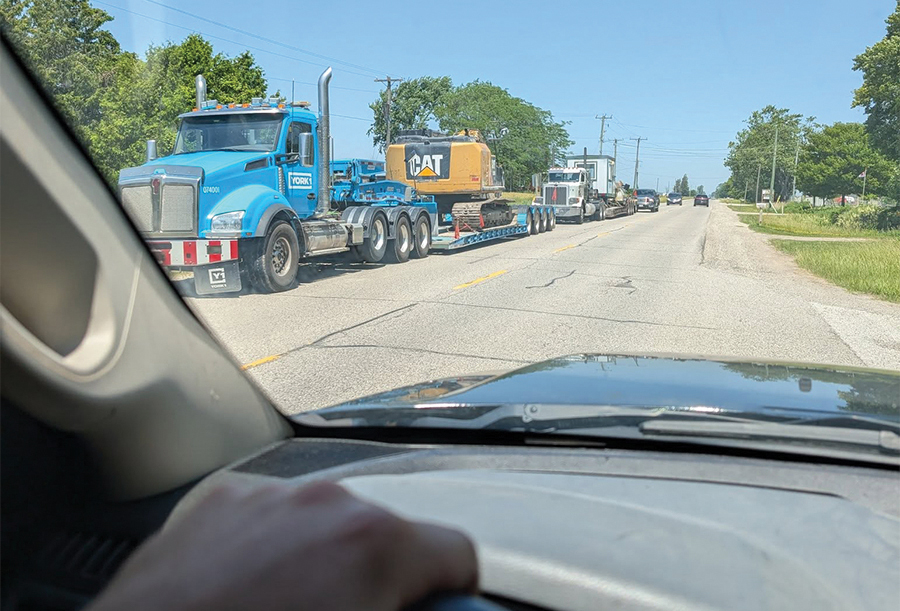
PHoto via Facebook
York1 Environmental began working at the site in late June, more than 20 days after the Canadian Environmental Law Association asked for a federal review of the project.
Feds have until November to decide if York1 project needs further study
September 26, 2025
Heather Wright/The Independent
It will likely be November before the federal government decides whether the Impact Assessment Agency of Canada should review York1 Environmental’s plans for the Dresden dump.
The agency is now reviewing the project and the objections filed by the Canadian Environmental Law Association for its clients, the Dresden CARED group to determine if a full review should move forward.
York1 Environmental has plans to turn the derelict dump into a construction and soil waste recycling centre and rebuild the 20-acre landfill. Up to 700 trucks a day could be headed to Irish School Road site bringing 6,000 tonnes of waste a day if the project moves ahead as the Mississauga company originally planned.
York1 tried to get provincial approval through the Environmental Compliance Approvals division. That would have provided little public input. After a huge public outcry in Chatham-Kent and Lambton County, the provincial government promised a full Environmental Assessment of the project. But in June, the government passed Bill 5, which reneged on the promise.
That prompted CELA to ask for federal intervention. The Impact Assessment Agency of Canada began its review of CELA’s concerns in August.
Theresa McClenaghan, CELA’s executive director, and Richard Lindgren the group’s lawyer, highlighted environmental issues and the lack of consultation with Walpole Island First Nation in the 77 page brief filed with the IAAC.
CELA points out “Molly’s Creek and 4th Concession Drain exist in close proximity to the site,
and both of them flow into the Sydenham River, which is less than 500 m from the site and contains
a significant number of species at risk, including some species that are globally rare…
“Bill 5 not only terminates the provincial environmental assessment of the project, but it also amends and repeals Ontario’s Endangered Species Act, 2007 and replaces it with the far less protective Species Conservation Act, 2025. Accordingly, the numerous species at risk and their habitat in the vicinity of the site will not have effective safeguards under provincial law.”
And the brief points out that the St. Clair Region Conservation Authority’s Source Protection Committee “has concluded that most aquifers in the Municipality of Chatham-Kent are highly vulnerable to contamination. This is a relevant consideration since the numerous residents living near the site rely upon domestic wells for drinking water purposes.”
The Environmental Law Association also points out Walpole Island First Nation is opposed to the project and has not been consulted on the project which is part of its unceded territory.
The brief also suggests other federal legislation says placing a landfill in areas inhabited by visible minorities – such as the historic African Canadian community in Dresden – could be considered a form of racial discrimination.
“If the Dresden Landfill Project is not designated under the IAA, there will be no environmental assessment requirements that have to be satisfied by the proponent before proceeding with the project,” McClenaghan and Lindgren wrote adding the existing provincial Environmental Protection Act and Ontario Water Resources act “are not an adequate substitute for a robust, credible and participatory environmental assessment process.
“The project’s potential adverse effects within federal jurisdiction cannot be adequately managed
through other existing legislative or regulatory mechanisms at the provincial level.”
The IAAC Media Relations Officer, Anna Pittas, says the agency will review the request for up to 90 days to decide if the federal government should intervene. “A decision will be posted to the registry on or before November 20,” Pittas says in an email.
The agency has reached out to York1 for information about the proposed project. “Currently, there is no public comment period open,” Pittas said.
The IAAC website says the agency considers public concerns, impacts the project may have on the rights of Indigenous peoples, and whether there are other government agencies which could examine the affects of the project as it makes its decision on whether or not to designate the project for review.
If the agency decides the York1 project should be reviewed, that process would take 300 days, according to the federal agency’s website.
NEXT
‘The world lost a bright light’
PREVIOUS
No picket lines yet in Petrolia as Canada Post workers walk off the job

Front Page
Middlesex man facing seven charges after Wyoming crash
October 22, 2026
The Independent An accident in Wyoming led to multiple charges including uttering death threats. Oct. 21, just before 6 pm, the OPP was called to a home on Brooke St. near London St. for a disturbance. There was a single car accident and police conducted a traffic stop. A 41-year-old man from Middlesex County was arrested and charged with He
Read More
Front Page
Water restrictions lifted in Lambton
October 22, 2026
The Independent People in Plympton-Wyoming, Warwick, Brooke-Alvinston and Forest can resume normal water use. Yesterday, the Lambton Area Water Supply System asked people to conserve water while workers repaired a major problem on London Line. Clinton Harper, LAWSS general manager, said crews were working on a waterline on London Line near Mandaumin when there was a problem. He says the
Read More
Front Page
Chicago man on his way back to US charged with impaired driving
October 22, 2026
The Independent A Chicago man’s travels were delayed after Canada Border Services stopped someone they thought was impaired. Oct. 19, just before 8 am, Lambton OPP went to the Blue Water Bridge. They arrested a 48-year-old Chicago man and charged him with impaired driving. The man was given a 90-day driver’s licence suspension and his vehicle was impounded for seven
Read More

Front Page
McGregor scores as Team Canada advances to semis
October 22, 2026
The Independent Forest’s Tyler McGregor notched a second period goal in Team Canada’s 7-0 win over the host team at the International Para Hockey Cup in Czechia on Wednesday. McGregor has four goals and an assist in three games at the tournament. Canada will play Czechia in a rematch in semifinal action on Friday. The U.S. takes on the World
Read More