LAMBTON VOTES – AUDIO: Warwick Township Round Table discussion

Glenn Ogilvie Photos
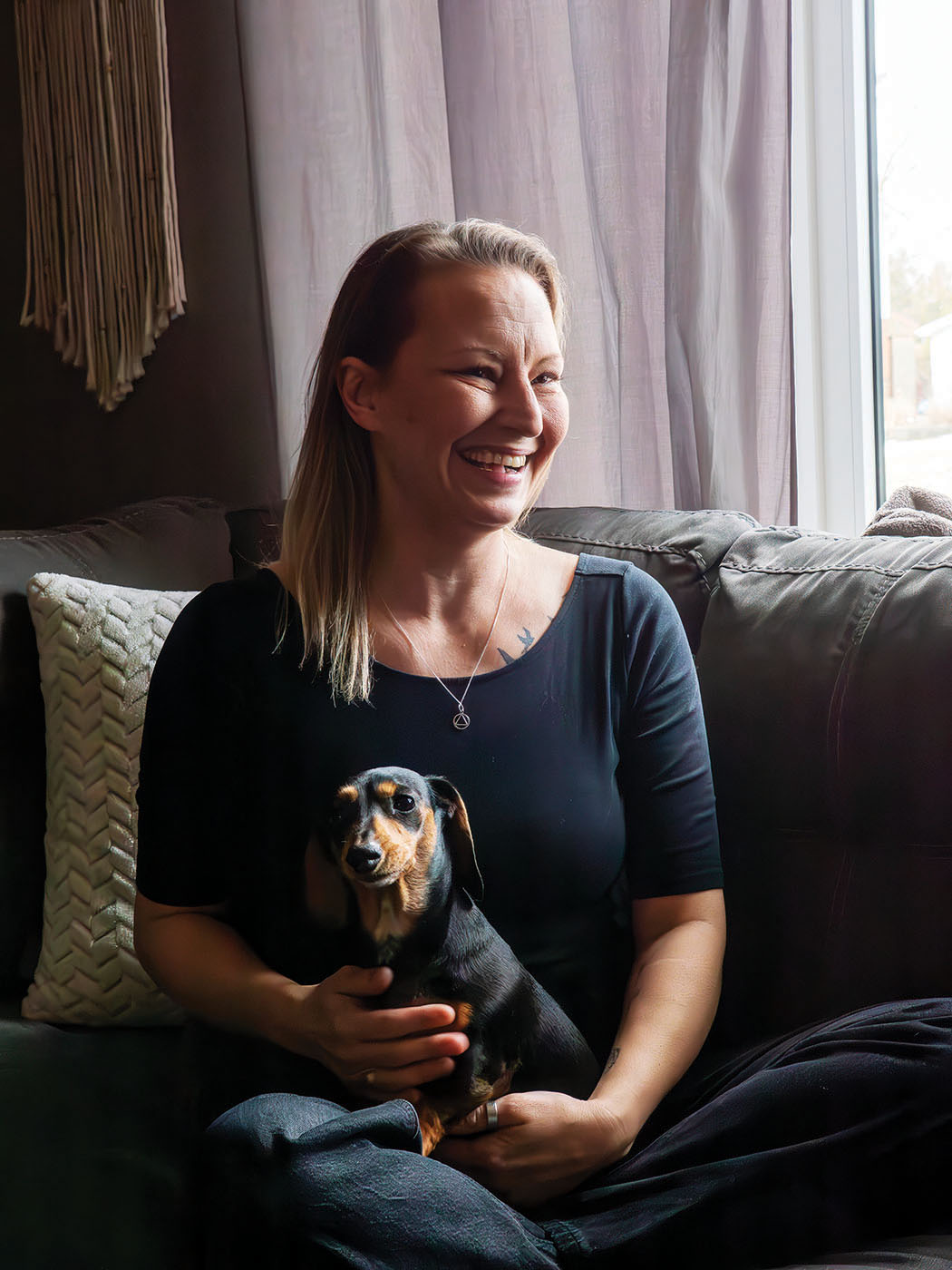
Jamie Shilson, pictured with her dog Barbara. “This life I’m building now is beyond my wildest dreams,” she says.
ROADS TO RECOVERY: Grateful to be told she was an addict
May 20, 2026
EDITOR’S NOTE: Sarnia-Lambton is struggling with an unprecedented addiction crisis, generating plenty of news about overdoses and homelessness. But sometimes there is recovery. And it’s anticipated that new government investment in local services and facilities will bring additional relief. The award-winning team of journalist Cathy Dobson and photographer Glenn Ogilvie set out this past winter to find individuals who have experienced serious alcohol and drug addictions, and who found their own path to recovery. Below, you can find the full supplement which appeared in The Independent May 14, 2026. Watch here for further stories.
Cathy Dobson/Local Journalism Inititiave
Jamie Shilson never would have believed she’d feel such profound peace in sobriety.
Along with a new sense of calm, recovery has given her faith in herself that did not exist during years of alcohol and cocaine addiction.
Now age 44, she spent most of her adult life drinking to the point of blacking out. Shilson says she did not begin to recognize the truth until a girlfriend called her out on her behaviour at her daughter’s 15th birthday.
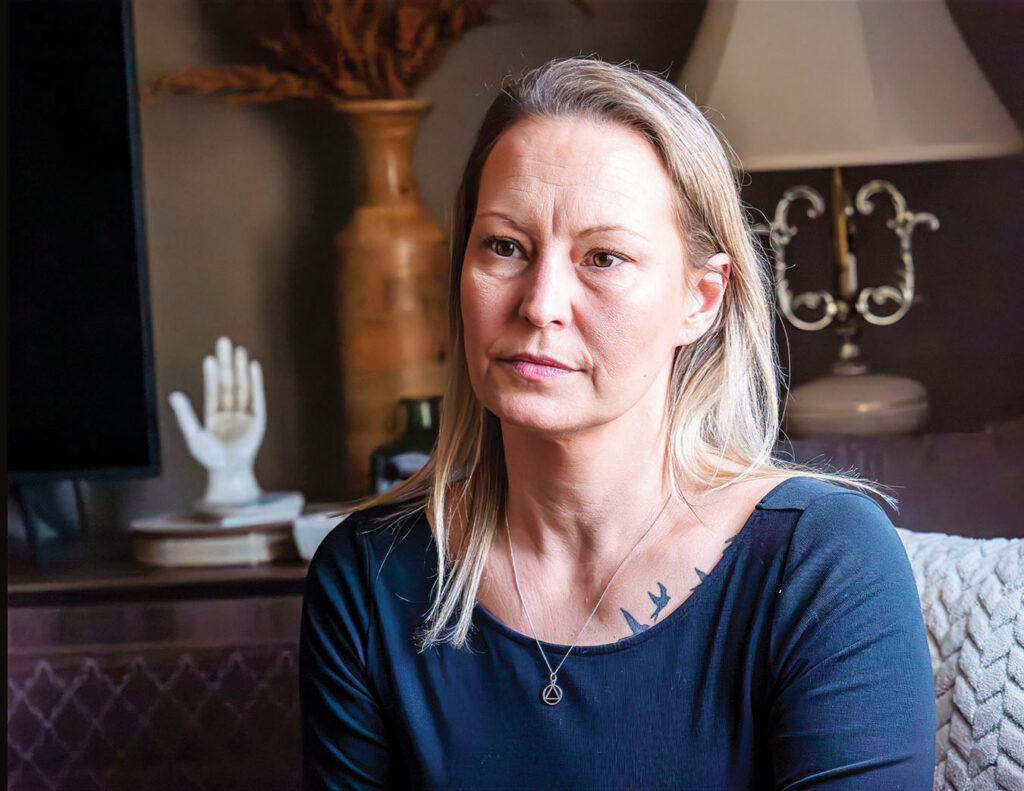
“If I never realized I was an alcoholic, I’d still be living in the dark,” she said, relaxing at home where she lives with her son, her daughter and a little Dachshund named Barbara.
“I’m not embarrassed about it. I’m actually grateful I found out I was an alcoholic and an addict because now I have ways to deal with how my mind works and how I see things,” she said.
Until 2018, Shilson was mostly what she called a functional alcoholic. She held down a full-time job in retail and was raising her kids. But she never felt well.
“I had low-energy. It was just sad. It was dark. That’s how I view it,” she said. “When I found you can go to bed happy and wake up happy, I thought, ‘Wow, there’s another way to live.’
“Now I can just live my life and not drink to cope.”
Shilson began drinking as a teenager and often drank with her mom – who also chose recovery three years ago. Their relationship was very co-dependent and Shilson said she lost accountability for herself.
“It was like I fit in with everyone when I drank,” she said. “Alcohol and cocaine were so common in my life – and in this community, to be honest – that I didn’t think I was any different from everyone else. I didn’t recognize when the shift happened and I started drinking and using because I needed to.
“I couldn’t function without it. I’d be drinking in the morning, calling Dial-A-Bottle three times a day and having strange people show up with drugs at my house.
“Today I look at it and I’m mortified. But that’s what happens. You get so lost.”
At her worst, Shilson quit her job and collected social assistance even though she was a single mom supporting her family. She felt beyond help.
The last three months before she detoxed were the “bottom of the bottom,” she said. “That was when I drank daily and had started using cocaine. I relied on my daughter to do a lot and to take care of my son. I was in a place where I didn’t care. Nothing mattered anymore.”
Shilson felt unequipped to get into a detox and rehab program. “I had no idea what resources were out there. I thought it would have been out of town and I thought I’d need money for it,” she said.
“I know now that there are lots of different programs locally to help, like withdrawal management at the hospital and 12-step programs. It’s basically free therapy.
“All you have to do is show up.”
But in the depths of addiction, Shilson didn’t have that insight.
So she moved into her girlfriend’s basement to detox for a couple of weeks.
“It was all a blur and I was really sick,” she said.
“I had hit a wall and didn’t know what else to do,” she said. “I didn’t want to die. But I didn’t know how to live.” Showing up again for her children was a big factor in her choice to get sober.
She went to therapy after a few weeks, and found a psychiatrist. She also began attending 12-step meetings. Her last drink was on March 16, 2019.
“I’d like to share that it’s very, very hard to get sober. It’s a lot easier to stay sober because the farther you get away from that last drink, the more your mental defences build.
“You learn better coping mechanisms and what’s important to you. The longer that I’m in recovery, the more confidence I have that I will stay sober.”
Later, she attended a one-week co-dependency course at Westover Treatment Centre, about a two-hour drive from Sarnia.
She joined 12-step meetings three or four times a week and remains very involved in the program’s service work, which is her way to give back. For instance, she assists with 12-step meetings at Ryan’s House, Bluewater Health’s transitional facility for people in early recovery.
“That is a wonderful place,” she said. “I’ve seen some crazy transformations of people going through there. It’s very fulfilling.”
Recently, she’s also helped with 12-step meetings at the new Hart Hub, the new 18-month transitional housing facility that opened at the former SCITS high school building.
In recovery, she said she’s had strong support from her doctor, and from several good friends who drove her to meetings, celebrated her progress and answered the phone when she felt lost.
“They were a really important part of my recovery and still are,” she said.
In 2020, Shilson went back to school and completed a two-year executive office administration course.
Lambton College has mental wellness counsellors available to all students on a drop-in basis. Shilson frequently knocked on their door.
“They were pivotal for my first year of sobriety,” she said. “I went into that office so many times if I was struggling. They were so great.
“If they weren’t there, I don’t know if I would have made it through. You have to utilize what’s out there.”
She graduated with honours and immediately found a full-time job. Shilson is now operations manager for Sarnia psychologist Dr. Virginia South and Associates.
“I love it,” she said. “This life I’m building now is beyond my wildest dreams. I know it sounds cheesy, but it’s not about the things I have. It’s how I feel.
“Before when I drank and in early recovery, I was very busy, always going at a fast pace, complaining about poor me.
“Now I have this peace of mind, security, safety, calmness that I didn’t know existed.
“I think it’s important to say that I don’t believe that you can ever be recovered,” she added. “I think you are forever in recovery. Once you’re into addiction, you’re always an addict.
“It’s not just one and done.”
Where to find help
- Alcoholics Anonymous – 519-337-5211 www.aasarnialambton.com
- Narcotics Anonymous – 1-800-573-0920 www.orscna.org
- Canadian Mental Health Lambton Kent – 519-337-5411 www.lambtonkent.cmha.ca
- 24/7 Canadian Mental Health Crisis Line – 519-336-3445 or 1-800-307-4319
- Drug Addiction Hotline – 1-800-721-3232
- Distress Line (Family Counselling Centre) – 519-336-3000
- Bluewater Health Community Addiction Support – outpatient and walk-in services, crisis intervention, counselling, treatment referrals, for people in Sarnia-Lambton who struggle with substance abuse. Phone 519-332-4673 or email possible@bluewaterhealth.ca. Location: Bluewater Health, Level 6, Russell Building, 89 Norman St. Sarnia.
- Bluewater Health Acute Withdrawal Management – includes inpatient, 7-bed unit for detox for three – five days. Self referral. Counselling. 24/7 519-464-4487
- Bluewater Health Ryan’s House Stabilization Facility, a second-stage withdrawal management facility. Offers 12 beds for men and women over 16 to stay up to one month for early recovery following detox. 306 Exmouth St. Sarnia.
- HART (Homelessness and Addiction Recovery Treatment) Hub – recently opened in Sarnia. Two locations. 30-bed residential facility (up to 18 months) considered the third stage for recovery in Sarnia-Lambton, following detox and Ryan’s House. 275 Wellington St. (formerly SCITS high school).
- HART Hub drop-in at 210 Lochiel St. offers recovery support services, showers, laundry, a kitchen, health care referrals, help finding housing, employment, and mental health supports.
- Suicide Crisis Helpline – 9-8-8 (call or text)
- Community Health Integrated Care (CHIC Team) Daily, on-scene interventions, rapid response, withdrawal management.
- MobileCare – Community Health Outreach. Travels across urban and rural S-L with free, walk in services. No appointment required. Primary care, mental health care, addictions services, withdrawal management services and referrals. 1-866-299-7447. www.sl.mobilecareclinic.ca.
- Bluewater Methadone Clinic S-L at 118 Victoria St. in Sarnia. 519-337-5000.
- Chippewas of Kettle and Stony Point Health Services for mental health and addictions at 6275 Indian Lane, Lambton Shores. 519-786-5647.
- Youth Wellness Hub – 190 Front St. for ages 12 – 25 and their families. Crisis/Walk in support, case management, psychotherapy, peer support, addiction services, nurse practitioner, drop in activity groups, fitness activities, family support, housing support and vocational services. 519-491-1466
- Redpath (Inn of the Good Shepherd on John St. Sarnia) Addictions treatment using an Indigenous specific model. Clinical and cultural approaches in a group setting. Call 519-344-1746 ext. 338.
- Lambton College personal and mental health counselling – available free to all full and part-time students.
Regional longer term residential rehab facilities:
- Westover Treatment Centre in Thamesville, call 1-800-721-3232;
- Renascent Addiction Centre in Toronto, call 1-866-232-1212;
- Residence at Homewood and Health Centre in Guelph, call 1-438-258-5460;
- Brentwood Recovery House in Windsor, call 519-253-2441;
- Hope Place in Milton, call 905-878-1120.
NEXT
Seven Lancers advance to OFSAA West Regional Track and Field Championship
PREVIOUS
‘We’re here because you don’t have a voice anymore’ Rood says
Front Page
LAMBTON VOTES – AUDIO: Warwick Township Round Table discussion
October 16, 2026
Natural gas decision may come soon, but warwick has heard that before Heather Wright/The Independent In 2018, the Ford government sent the then Lambton-Kent-Middlesex MPP to Warwick with good news; natural gas was coming to the community. Eight years and dozens of meetings with the provincial government later, the community is still waiting. During a Round Table hosted by The
Read More

Front Page
NOVA fined $150K after 2024 benzene leak
October 16, 2026
The Independent NOVA Chemicals has been found guilty of failing to report a benzene spill at its Petrolia Line plant. On Jan. 20, 2024, there was a spill of about 1,475 litres of benzene. An investigation found the benzene leaked out of the gear box vent of a pump due to a failed seal within the pump. The benzene which
Read More

Front Page
Petrolia candidates talk keeping taxes down, growth at all-candidates night
October 16, 2026
Heather Wright/The Independent It’s a question municipal councillors likely hear a lot; what are you going to do to lower my taxes. It was one of the questions at the All-Candidates Night for the 12 Petrolia council candidates Oct. 15 at Victoria Hall. All 12 candidates, Ethan Brown, Bill Clark, Miranda Cole, Chad Hyatt, John McDonald, Marty Souch, Paul Stilwell,
Read More
Front Page
Climate Action group disappointed with campaign claims
October 15, 2026
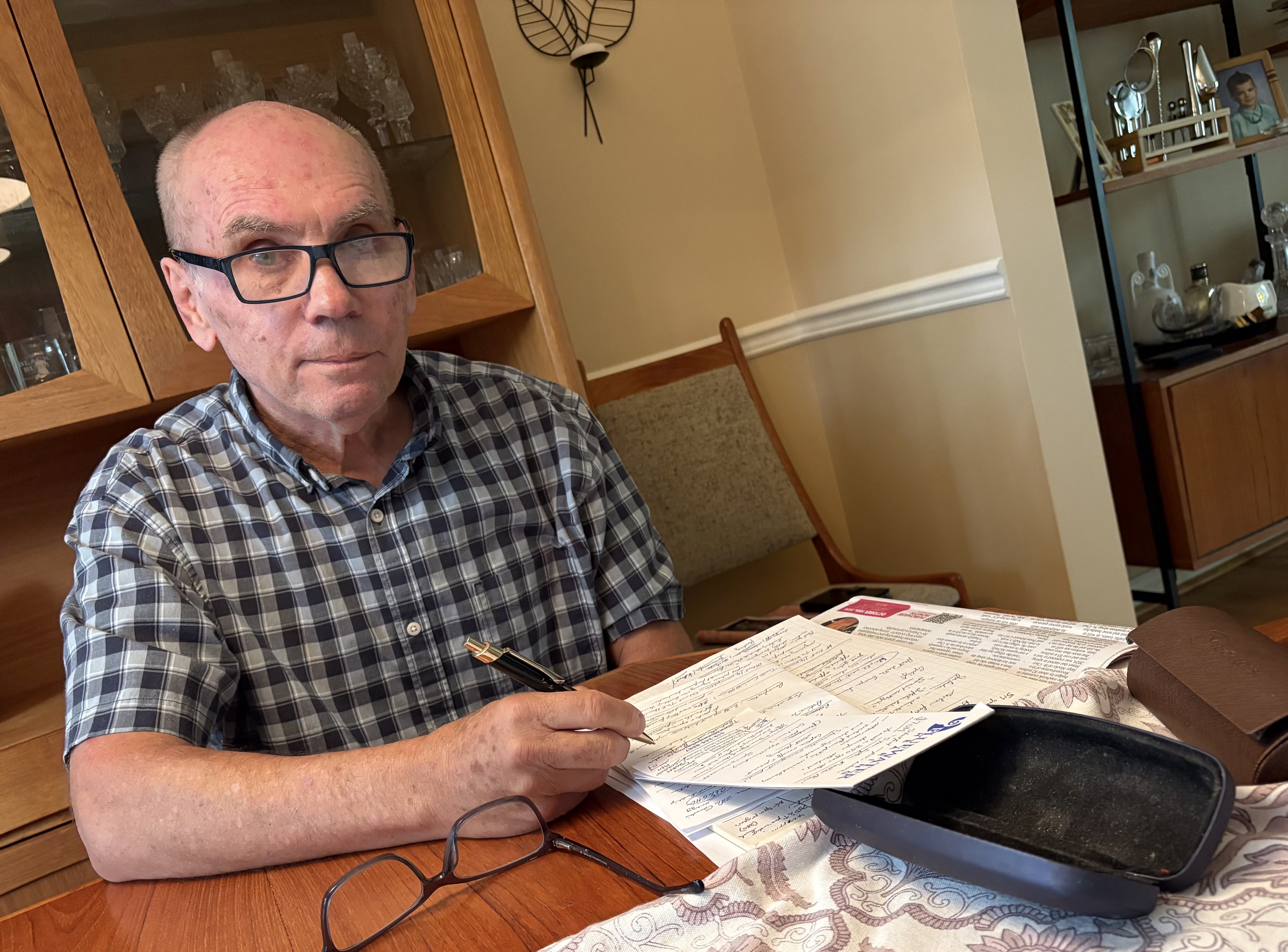
Cathy Dobson/The Independent Climate Action Sarnia-Lambton members are smarting from mayoral candidate Bill Dennis’ claims that climate change is not real, says co-chair Allan McKeown. “We were really not surprised by Bill Dennis’ comments. I know he considers us an enemy,” said McKeown, who has represented the Green Party several times in Sarnia-Lambton and Chatham-Kent. “But I think it’s absolutely
Read More