Sarnia all-candidates debate a revealing evening


Students at Mount Elgin Residential School.
Pupil 791
September 30, 2025
In 1938, four-year-old Cody Claus was sent 139 kms from his home to go to Mount Elgin Residential School. He never went home again.
Heather Wright/The Independent
Cody Claus was just four when he left his home in Oshwekan to become pupil Number 791 at the Mount Elgin Residential School.
He never returned home.
The little boy’s tragic death is just one of an estimated 6,000 children who died in the residential schools which the Truth and Reconciliation Commission of Canada concluded were “a systematic, government-sponsored attempt to destroy Aboriginal cultures and languages and to assimilate Aboriginal peoples so that they no longer existed as distinct peoples.”
For more than 150 years, First Nations, Inuit and Métis Nation children were taken from their families and communities to attend schools often located far from their homes.
The first church-run Indian Residential School was opened in 1831. By the 1880s, the federal government funded residential schools across Canada to separate children from their families and cultures.
The Missionary Society of the Wesleyan Methodist Society and the Department of Indian Affairs joined together to open Mount Elgin Residential School in 1851.
Indigenous leaders in southwestern Ontario lobbied for boarding schools to acquire the academic skills necessary to participate in society on an equal footing with non-Indigenous people. Ojibwa leader Kahkewaquonaby (Rev. Peter Jones), who converted to Methodism, expected the school to train girls and boys to become political leaders, missionaries, teachers, and interpreters, not domestic servants and farm hands. He raised money to open the school.
Soon after its opening, it became apparent that Mount Elgin would not be operated by Christian Indigenous leaders as Jones thought. He refused to send his own children there.
Indigenous communities had originally bought into the schools agreeing in 1845 to set apart one-fourth of their annuities for the building and maintenance of industrial schools. The Chippewas of Sarnia – Aamjiwnaang First Nation – the Chippewas of the Thames, the Mississaugas of the Credit, and the Moravian of the Thames contributed a combined total of $2,372 yearly until the school temporarily closed in 1862. In later years, another $22,600 was allocated to the school from First Nation funds without the First Nations’ consent.
Initially only children from contributing communities were admitted to the school. By 1885, Mount Elgin accepted Indigenous children from across Ontario, including Cody Claus.
Cody, whose full name was Courtland was assigned the pupil number of 791. He was from Oshwekan – a rural community within the Six Nations of the Grand River, in Brant County.
Cody was four when he was first sent to the Mount Elgin Residential School even though changes to the Indian Act in 1920 set the age for residential school students between seven and 15.
Documents held by the Truth and Reconciliation Commission show the boy, who was small for his age, was brought to the school, commonly called the Muncey Institute, with his two siblings in July 1938.
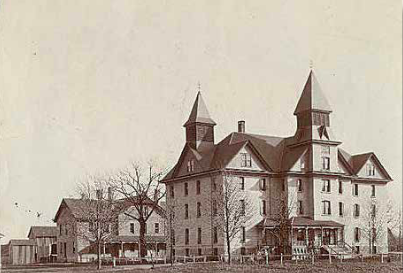
with enrolment at 86 students, overcrowding had become a major
problem and the original school building (seen here behind the new
four-storey residence) was in poor shape. In 1896, the Department
of Indian Affairs, with funds appropriated from band accounts,
constructed the new building in the foreground.
The school already had a horrible reputation. In 1901, contaminated water killed one person and, in later years, several children were injured with the laundry’s mangle, which was outdated and in need of replacement.
The fire escapes were routinely padlocked to stop students from escaping the school.
Government inspectors also highlighted poor ventilation, inadequate bathrooms and unsafe buildings.
In a 1942 report, the superintendent of Welfare and Training described Mount Elgin’s buildings as “the most dilapidated structures that I have ever inspected.”
Students endured 15-hour days, with seven-and-a-half hours of manual labour working on the school’s farm, digging ditches for water pipes and household chores.
Even with its obvious problems, and the fact another residential school was much closer, Courtland, Ivan and Lucille Claus were sent to the school 139 kilometers away from home before Cody was eligible for school.
“The father of these children is a cripple and not able to support them and also the parents are separated, consequently it would be in the best interest of the children that they should receive institutional care,” wrote a superintendent.
The Mohawk Institute in Brantford would have been much closer, but officials wrote “it is felt that at that distance from this Reserve, the children will not receive constant interference from their mother.”
Cody had been at the school for 11 months when he came down with an ear infection. School officials thought the best remedy would be time confined to his bed in the dormatory which he slept. The four-year-old was left alone with only occasional visits from other students who brought food, “for some days” according to the principal.
On June 11, 1939, the students assigned to “hospital duty” brought Cody his lunch. One heard Cody’s footsteps scampering across the floor to get back to bed before she came in.
That student was the last person to see the active child alive.
After the students left, likely around 1 pm, something drew the little boy to his window – perhaps the other students, including Lloyd Nicholas, 17, Ruth Antone, 17 and Christine Henhawk, 18, who were in the school yard on the Sunday afternoon.
Antone saw Cody at the second storey window as they talked. She turned away for a moment and when she turned back, Cody was falling. Christine Henhawk told police he made a “complete turn in the air” as he plunged 30 feet.
The trio rushed to the boiler house and found Cody lying on the ground. “Cody did not move or cry out at any time after he fell,” Antone told police.
She helped lift Cody’s head so Lloyd Nicholas could carry the child indoors where he placed him in a bed on the first floor.
“It is quite evident that the boy, who was short even for his age, had attempted to look out of the window at some activity immediately below him,” wrote RCMP Const. JD Burger in his report. “To do this, he would have to lie practically on the window sill as it is very wide and there is no doubt whatsoever that in doing this, he leaned out a little too far and lost his balance.”
The school called Dr. Ray McLeod “to come immediately.” Nurse Ada Stanley said the little boy was “almost pulseless,” unconscious and bleeding from his mouth and one ear.
Dr. McLeod arrived “a few minutes later” according to the school’s principal and the five-year-old was taken to Victoria Hospital in London by car in a brace. “Little hope was held out for recovery as it was evident there was brain injury and internal hemorrage,” the principal, O.B. Strapp wrote to the Director of Indian Affairs.
Cody’s “prognosis was felt to be nil” when he arrived at the hospital two hours later.
The RCMP in Brantford delivered the news to his father. By 9 pm, he was next to his little boy “and remained there until he died,” at 3:35 on the morning of June 12, Strapp wrote.
The RCMP’s report, written the next day, concluded “There will be no inquest in this case. Cause of death was given as a fractured skull, sustained in falling from the window.”
While the authorities didn’t see the need to investigate, Dr. McLeod laid blame for the incident squarely at the feet of the officials at Mount Elgin Residential School.
“I do not approve of (a) four-year-old ill boy being left alone in dormitory,” he wrote. “While regulations do not demand screens on windows, had screen removed for repair been replaced immediately, fatality might have been avoided.”
In a statement, the Indian Agent agreed saying “precautions should have been taken to make the window fast until the screen was returned so that a pupil so young as Cody Claus could not raise it at will.
“It is also felt that pupils should not be placed in a residential school at the age of four years, such as Cody Claus, as they cannot accept discipline and also need extra attention and supervision from a limited staff,” the Indian Agent wrote, giving the opinion children should be at least six years old.
Cody Claus was not the only student to lose their life at Mount Elgin. Wetuhnashch, who was called Simon Altman, died in 1905, Jesse Mcgahey died in 1906, Helen May Seneca died in 1944 and Evangeline Jackson also died at the residential school, although records don’t show when she died.
The Truth and Reconciliation Commission of Canada says while 6,000 children are estimated to have died, thousands of others suffered physical and sexual abuse. All were lonely, longing to be home. They often attempted to leave. One day in 1937, 22 children escaped. From 1938 to 1941, 17 children ran away each year.
The schools had lasting impacts on the Survivors. Many say talking about their experiences in residential schools relives the traumas. For years, many told no one about what they had endured.
The separation from families had long-term effects says the Truth and Reconciliation Commission.
“Children were deprived of healthy examples of love and respect. The distinct cultures, traditions, languages, and knowledge systems of First Nations, Inuit and Métis peoples were eroded by forced assimilation.”
In 1996, the landmark Royal Commission on Aboriginal Peoples drew attention to the lasting harm that was done. Through the courage and persistence of Survivors, an eventual legal settlement was reached between Survivors, the Assembly of First Nations, Inuit representatives and the defendants, the federal government and the churches responsible for the operation of the school.
The Truth and Reconciliation Commission says The Indian Residential Schools Settlement Agreement included:
• A commitment to a public apology given June 11, 2008 by then Prime Minister Stephen Harper.
• Financial compensation to Residential School Survivors and a Commemoration Fund.
• The creation of the Truth and Reconciliation Commission to inform all Canadians about what happened in the Residential Schools by witnessing and documenting the truth of Survivors, families, communities and anyone personally affected by the Schools. The TRC issued an extensive report on the history of residential schools as well as Calls to Action and Principles of Reconciliation.
The Settlement Agreement was not comprehensive. The Métis Nation Survivors were not part of it. A separate settlement was reached with Survivors from Newfoundland and Labrador in 2016. A settlement agreement with Survivors of federal Indian Day Schools was not reached until 2019.
The National Truth and Reconciliation Centre is carrying on key aspects of the commission’s work, including safeguarding and adding to the archive of Survivor statements and other records and building a registry of the thousands of children known to have died in residential schools.
Help is available for Survivors at
The National Residential School Crisis Line
Toll-free: 1-866-925-4419
The Indian Residential School Survivors Society Crisis Line
Toll-free: 1-866-925-4419
More information about residential schools can be found here https://nctr.ca
NEXT
Slots at Sarnia horse park to close in March
PREVIOUS
Shaw places third in cross country invitational
Front Page
Sarnia all-candidates debate a revealing evening
October 21, 2026
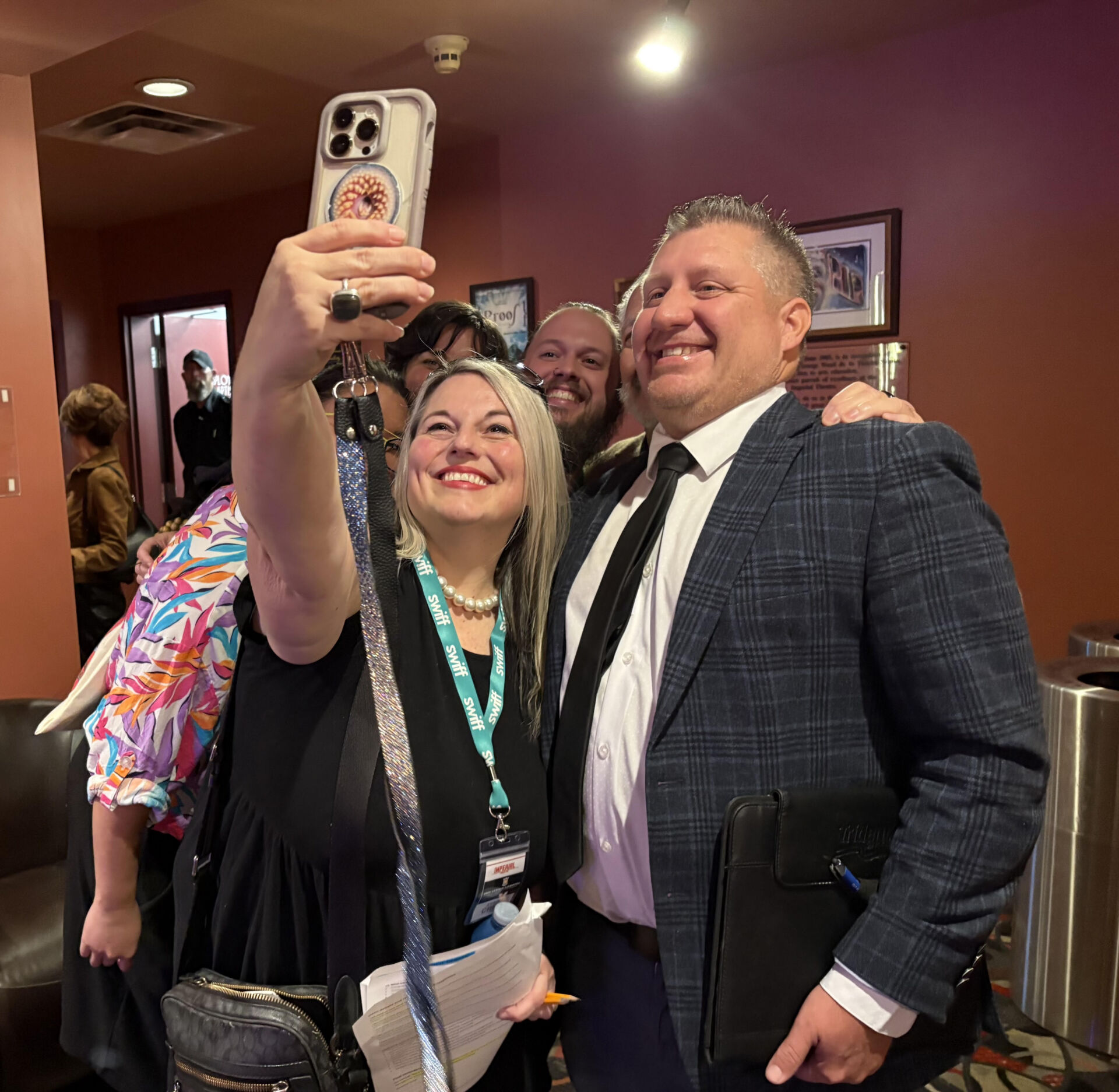
Cathy Dobson/The Independent With less than a week until election day, 28 candidates vying for eight council seats, spent four hours Tuesday trying to stand out as the right choice for Sarnia voters. They gathered at The Imperial Theatre in front of an audience of 200, with another 500 streaming the marathon event online. Compared to Monday night’s mayoral debate,
Read More
Front Page
St. Clair will be reimbursed for help at Chatham ethanol plant fire
October 21, 2026
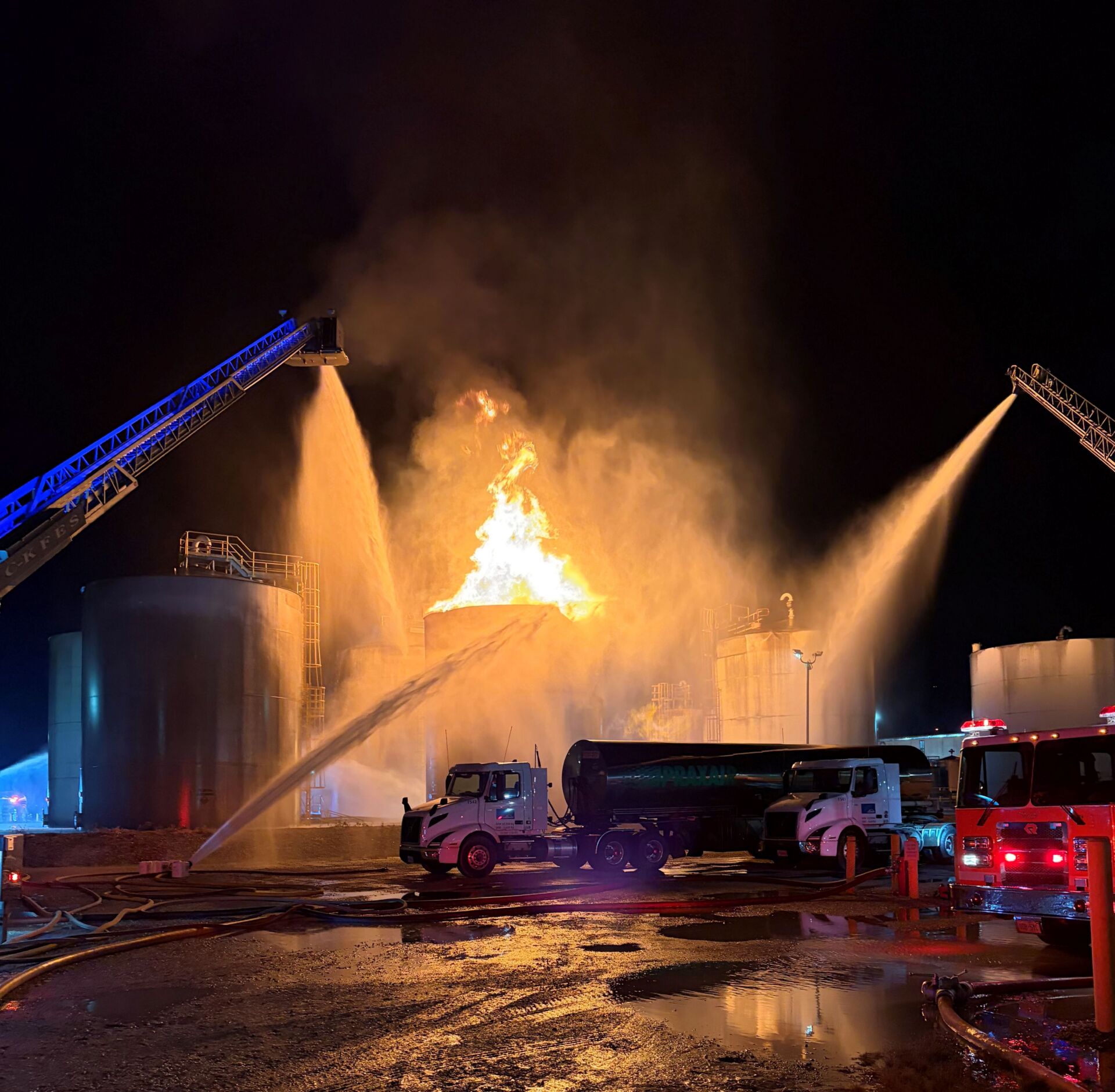
Heather Wright/The Independent St. Clair Township Councillor Brad Langstaff wants to know what it cost for the fire department to help fight an ethanol plant fire in Chatham. Sept. 16, 15 firefighters, the township’s two tower trucks and its drone headed to Chatham to help battle a massive fire at Greenfield Global. St. Clair was called on because it has
Read More

Front Page
Enniskillen rejects request for ATVs on township roads
October 21, 2026
Blake Ellis/The Independent ATVs won’t be allowed on Enniskillen roads. A request by Enniskillen Resident Mark Braet failed to sway Enniskillen Township Council to allow all terrain vehicles on township roads. Braet made a presentation to council on Oct. 8 along with representatives from the Tri-Shore ATV Club. Braet wanted to be allowed to drive ATVs on roads in the
Read More
Front Page
LAMBTON VOTES: Petrolia Candidate Surveys
October 21, 2026
The Independent sent a questionnaire to each candidate for Petrolia Council. Below are the unedited responses from the candidates: Work Experience: Policy Advisor, Sarnia-Lambton Chamber of Commerce; former Constituency Assistant to MPPs Bob Bailey and Billy Pang; former parliamentary intern with MPs Marilyn Gladu and Jake Stewart; former Town of Petrolia Parks & Recreation Summer Labourer; former Dietary Aide at
Read More