Middlesex man facing seven charges after Wyoming crash

ROADS TO RECOVERY: Workplace stigma slowly improving
May 18, 2026
EDITOR’S NOTE: Sarnia-Lambton is struggling with an unprecedented addiction crisis, generating plenty of news about overdoses and homelessness. But sometimes there is recovery. And it’s anticipated that new government investment in local services and facilities will bring additional relief. The award-winning team of journalist Cathy Dobson and photographer Glenn Ogilvie set out this past winter to find individuals who have experienced serious alcohol and drug addictions, and who found their own path to recovery. Below, you can find the full supplement which appeared in The Independent May 14, 2026. Watch here for further stories.
Cathy Dobson/Local Journalism Inititiave
Chris Dobbelaar has an impressive resume.
He’s a long-time employee at CF Industries in Courtright, gives back to his community daily and is a devoted dad of two.
When he isn’t coaching minor hockey in Wallaceburg, the 42-year-old is coaching baseball in Port Lambton where he’s also the president of the Gala Days summer festival.
And he’s made another, very personal, commitment. Whenever asked to speak publicly about how he found sobriety, he gladly does it.
“If one person makes a choice to ask for help because of something I say, then that’s a success,” Dobbelaar said. “I also hope to encourage people to reach out if they see someone struggling. Then tell them you love them and you’re willing to listen.”
Dobbelaar has been in recovery from alcohol and drug abuse for nine years. Excessive drinking began as a teen growing up on his parent’s farm in St. Clair Township. He partied on the weekends like a lot of teens but casual drinking turned into bingeing.
That was especially true if he was stressed by a breakup or some other emotional upset. Alcohol became a way to numb his feelings.
Dobbelaar describes himself as “a super sensitive, emotional person.” But he grew up not expressing those feelings, striving to please his parents and feeling pressure to do well.
“In my 20s, there was a stretch when I used cocaine,” he said.
“My true friends who knew me from childhood isolated from me. When I became sober, every one of them came back and they are around all the time now.
“I strongly believe that you are who you hang out with.”
Dobbelaar’s grandparents died when he was in his 30s. He suppressed his feelings and drank to cope. But alcohol abuse made him feel like he was a disappointment to the people who mattered most. Personal relationships fell apart.
The more he drank and did drugs, the worse he felt. It was a cycle he didn’t know how to break.
“Drinking numbs you and cocaine blocks your feelings,” he said.
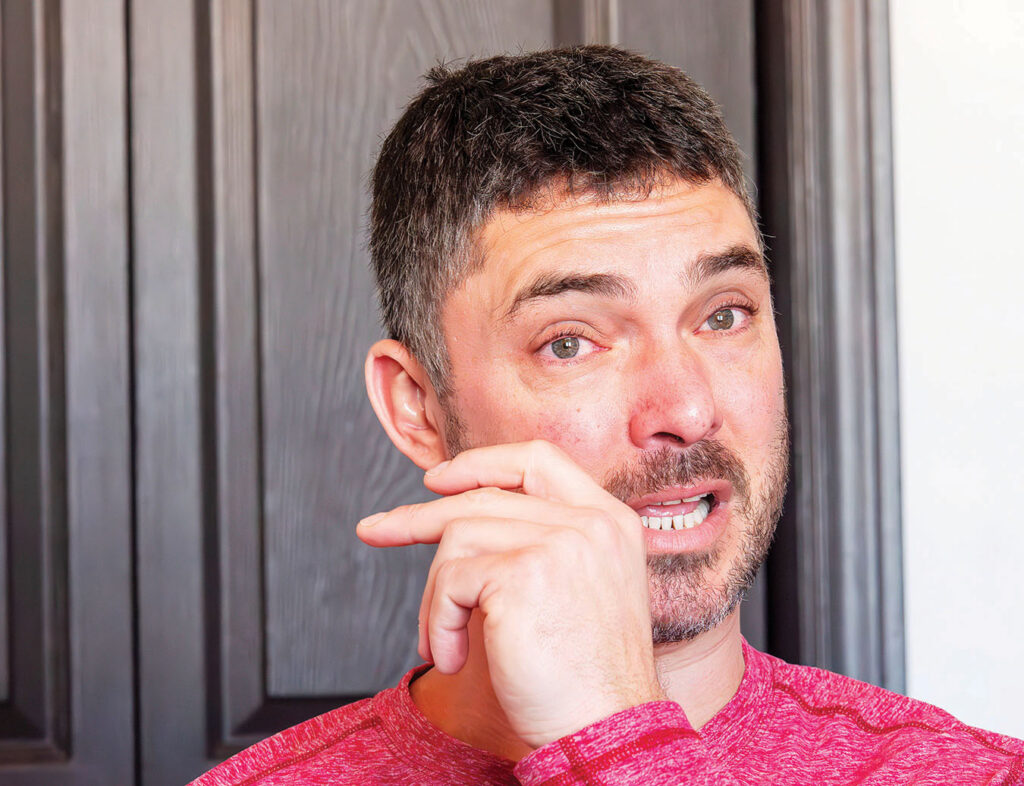

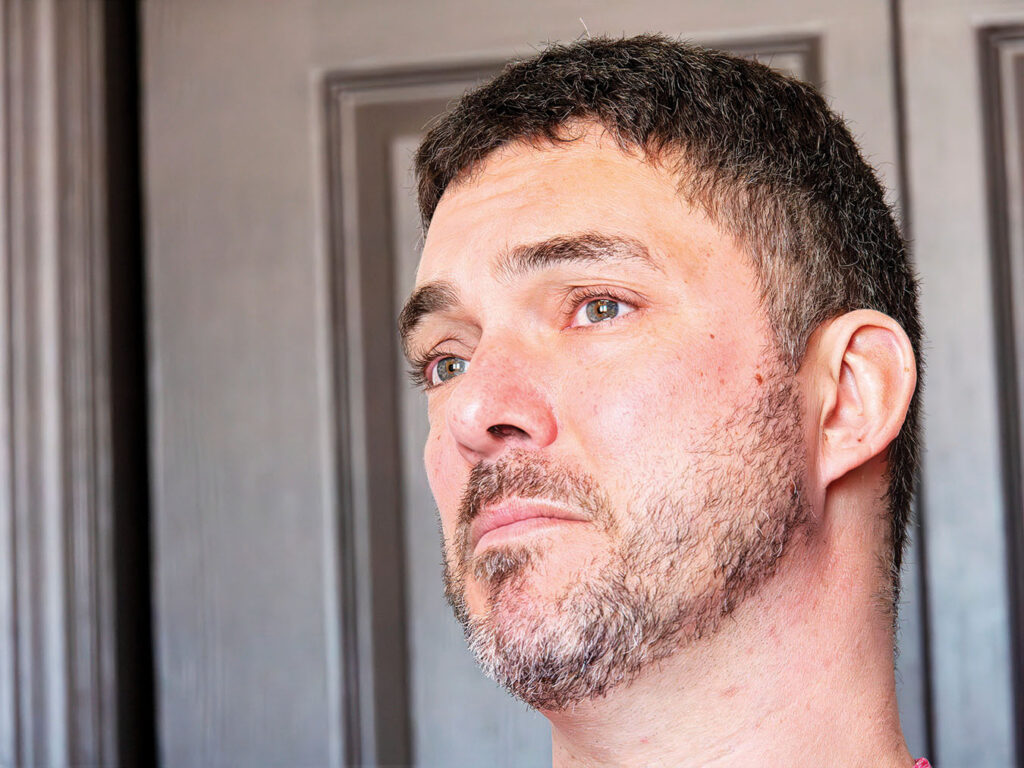
Chris Dobbelaar has been in recovery from alcohol and drug abuse for nine years
“I’m this emotional person but I was acting like I had no emotions at all.” He became suicidal.
Just before Christmas 2016, he took a bigger life insurance policy out.
That’s when his parents and sisters intervened, went to his house and urged him to go to rehab.
It was a classic intervention and it worked.
“I was in a pretty dark spot. I told my dad, ‘What took you so long?’” said Dobbelaar, his voice breaking with the tough memories of that day.
“I’d never seen my dad tear up in my life. He said, ‘A father should never bury his son, and I don’t want to bury you.’ That hit me hard.”
Having two young children was also a big motivator.
So at age 33, he went to a private residential detox, withdrawal and rehab facility in Port Hope where he had extended one-on-one counselling for the first time.
The program was designed to last 30 days.
Dobbelaar, fully committed, asked to extend his stay to 45 days. He requested homework on the weekend.
“I needed to be 110% (certain) that I was going to be sober, healthy and positive when I left there,” he said. “I had a lot of emotions coming out.”
Dobbelaar went to as many AA (Alcoholics Anonymous) and NA (Narcotics Anonymous) meetings as he could.
He continued attending meetings once he came home but stopped after one year of sobriety.
“The problem is I’m a real people pleaser and I’d be reaching out to people trying to get sober and when they didn’t succeed, I felt like it was my fault. It hit me too hard and I had to put up barriers.” AA and NA help many people, he added. “But they’re not for me.”
“I am very, very lucky I have family who supported me, even though I was making decisions that were against how I was raised,” he said. “The things I did when I was using still haunt me a lot.”
During the early years of recovery, Dobbelaar felt too vulnerable to share his story.
He has worked as a millright and now a planner at CF Industries for over 20 years. When he went into rehab, Dobbelaar was careful to keep it from his coworkers.
Like many in Sarnia-Lambton, he works in a male dominated industry where discussion of mental health and addiction hasn’t been the norm.
“I’m a strong guy working with my hands and my worst fear was what the guys at work would think,” he said. “I worried for years that maybe I’d be shunned in the shop and I wouldn’t be part of the camaraderie anymore.”
But the longer he’s in recovery, the more he feels workplace acceptance.
“The stigma is slowly going away that admitting to an addiction is a bad thing or a sign of weakness,” Dobbelaar said. “It actually takes a lot of strength to admit and ask for support or help.”
Six years after his last drink, he suggested his employer bring in a guest speaker for Mental Health Awareness Month in May.
Dobbelaar surprised himself by agreeing to be that speaker, along with Matt Barnes of Southwest Counselling in Sarnia. That first experience sharing his story went better than expected.
Some of his coworkers reached out to him for references and support.
Dobbelaar is convinced that talking publicly about mental health and addiction recovery saves lives.
It also helps him stay accountable.
“I don’t ever want to forget how far I’ve come, what I came through and how hard it was,” Dobbelaar said.
“When I talk about it, I always hope to help somebody, but it also helps me.”
Where to find help
- Alcoholics Anonymous – 519-337-5211 www.aasarnialambton.com
- Narcotics Anonymous – 1-800-573-0920 www.orscna.org
- Canadian Mental Health Lambton Kent – 519-337-5411 www.lambtonkent.cmha.ca
- 24/7 Canadian Mental Health Crisis Line – 519-336-3445 or 1-800-307-4319
- Drug Addiction Hotline – 1-800-721-3232
- Distress Line (Family Counselling Centre) – 519-336-3000
- Bluewater Health Community Addiction Support – outpatient and walk-in services, crisis intervention, counselling, treatment referrals, for people in Sarnia-Lambton who struggle with substance abuse. Phone 519-332-4673 or email possible@bluewaterhealth.ca. Location: Bluewater Health, Level 6, Russell Building, 89 Norman St. Sarnia.
- Bluewater Health Acute Withdrawal Management – includes inpatient, 7-bed unit for detox for three – five days. Self referral. Counselling. 24/7 519-464-4487
- Bluewater Health Ryan’s House Stabilization Facility, a second-stage withdrawal management facility. Offers 12 beds for men and women over 16 to stay up to one month for early recovery following detox. 306 Exmouth St. Sarnia.
- HART (Homelessness and Addiction Recovery Treatment) Hub – recently opened in Sarnia. Two locations. 30-bed residential facility (up to 18 months) considered the third stage for recovery in Sarnia-Lambton, following detox and Ryan’s House. 275 Wellington St. (formerly SCITS high school).
- HART Hub drop-in at 210 Lochiel St. offers recovery support services, showers, laundry, a kitchen, health care referrals, help finding housing, employment, and mental health supports.
- Suicide Crisis Helpline – 9-8-8 (call or text)
- Community Health Integrated Care (CHIC Team) Daily, on-scene interventions, rapid response, withdrawal management.
- MobileCare – Community Health Outreach. Travels across urban and rural S-L with free, walk in services. No appointment required. Primary care, mental health care, addictions services, withdrawal management services and referrals. 1-866-299-7447. www.sl.mobilecareclinic.ca.
- Bluewater Methadone Clinic S-L at 118 Victoria St. in Sarnia. 519-337-5000.
- Chippewas of Kettle and Stony Point Health Services for mental health and addictions at 6275 Indian Lane, Lambton Shores. 519-786-5647.
- Youth Wellness Hub – 190 Front St. for ages 12 – 25 and their families. Crisis/Walk in support, case management, psychotherapy, peer support, addiction services, nurse practitioner, drop in activity groups, fitness activities, family support, housing support and vocational services. 519-491-1466
- Redpath (Inn of the Good Shepherd on John St. Sarnia) Addictions treatment using an Indigenous specific model. Clinical and cultural approaches in a group setting. Call 519-344-1746 ext. 338.
- Lambton College personal and mental health counselling – available free to all full and part-time students.
Regional longer term residential rehab facilities:
- Westover Treatment Centre in Thamesville, call 1-800-721-3232;
- Renascent Addiction Centre in Toronto, call 1-866-232-1212;
- Residence at Homewood and Health Centre in Guelph, call 1-438-258-5460;
- Brentwood Recovery House in Windsor, call 519-253-2441;
- Hope Place in Milton, call 905-878-1120.
NEXT
Golf carts aren’t for highways OPP say
PREVIOUS
Coastal Centre looking for volunteers in Lambton Shores to monitor Lake Huron
Front Page
Middlesex man facing seven charges after Wyoming crash
October 22, 2026
The Independent An accident in Wyoming led to multiple charges including uttering death threats. Oct. 21, just before 6 pm, the OPP was called to a home on Brooke St. near London St. for a disturbance. There was a single car accident and police conducted a traffic stop. A 41-year-old man from Middlesex County was arrested and charged with He
Read More
Front Page
Water restrictions lifted in Lambton
October 22, 2026
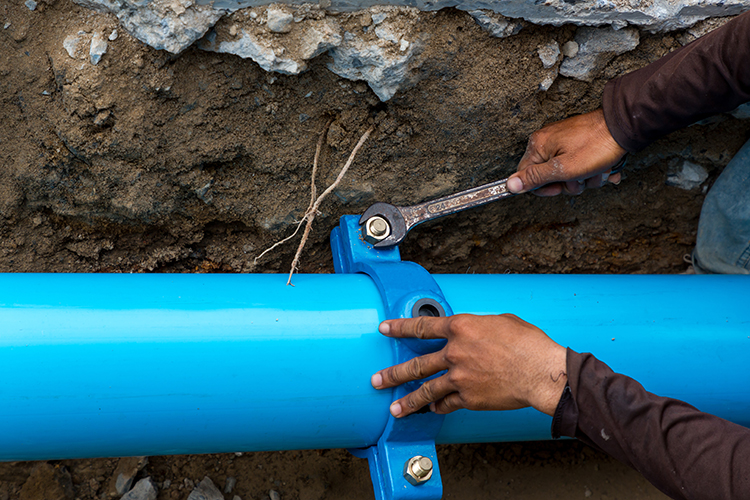
The Independent People in Plympton-Wyoming, Warwick, Brooke-Alvinston and Forest can resume normal water use. Yesterday, the Lambton Area Water Supply System asked people to conserve water while workers repaired a major problem on London Line. Clinton Harper, LAWSS general manager, said crews were working on a waterline on London Line near Mandaumin when there was a problem. He says the
Read More
Front Page
Chicago man on his way back to US charged with impaired driving
October 22, 2026
The Independent A Chicago man’s travels were delayed after Canada Border Services stopped someone they thought was impaired. Oct. 19, just before 8 am, Lambton OPP went to the Blue Water Bridge. They arrested a 48-year-old Chicago man and charged him with impaired driving. The man was given a 90-day driver’s licence suspension and his vehicle was impounded for seven
Read More
Front Page
McGregor scores as Team Canada advances to semis
October 22, 2026
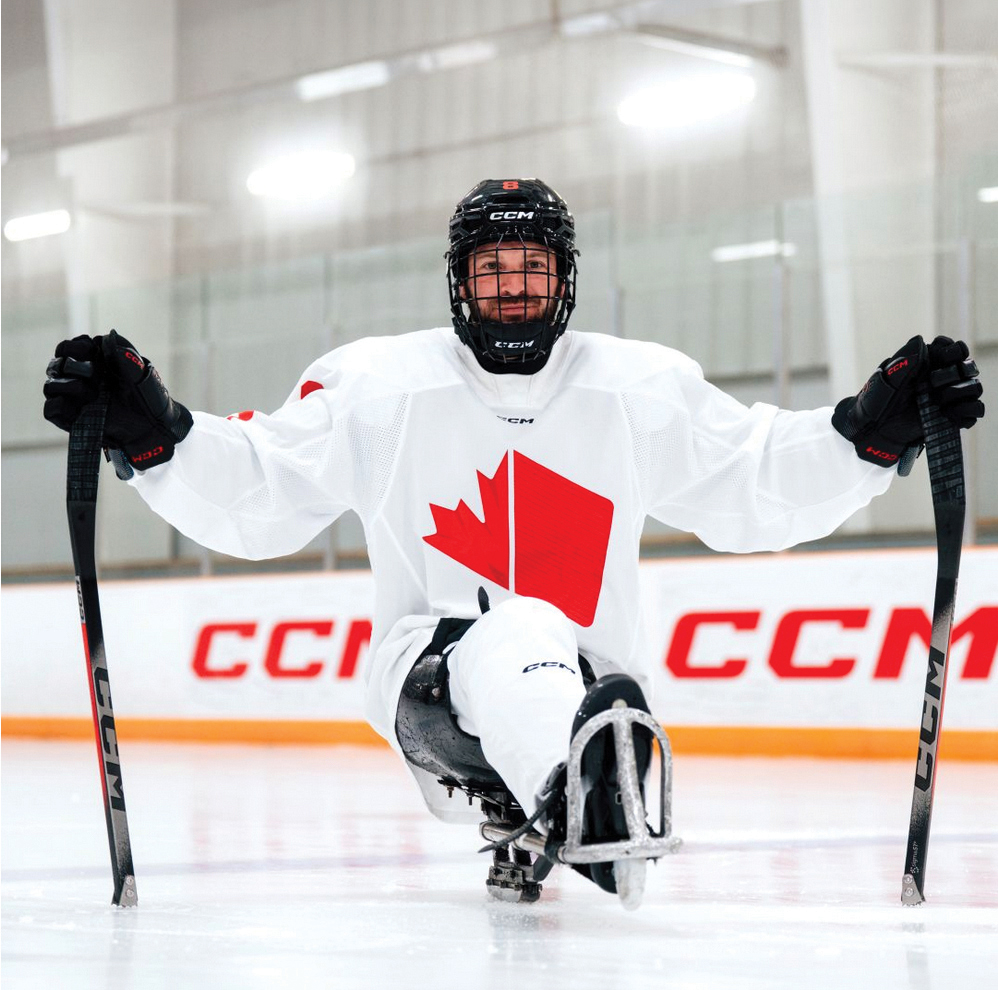
The Independent Forest’s Tyler McGregor notched a second period goal in Team Canada’s 7-0 win over the host team at the International Para Hockey Cup in Czechia on Wednesday. McGregor has four goals and an assist in three games at the tournament. Canada will play Czechia in a rematch in semifinal action on Friday. The U.S. takes on the World
Read More